
SSL
SAMUDERA SHIPPING LINE LTD.
Surcharges
(0 items)Select Container Type & Qty
Booking Information
Cargo Information
B/L & Payment
Shipper / Consignee
Submitted orders start as "Pending". We will confirm with you shortly.
Similar Rates



Ningbo to Mumbai FCL Ocean Route Overview
Ningbo(China) → Mumbai(India) is one of the India-bound ocean export routes from China, carried by SSL(Samudera Shipping Line), with an average transit time of about 24 days, direct service, with stable transit times. Common container types include 20GP, 40GP, 40HQ, suitable for general cargo, electronics, furniture, appliances, machinery, garments and more (India).
Ocean FCL (Full Container Load) is ideal for bulk cargo. Compared to LCL (Less than Container Load), it offers lower unit cost, faster transit, and simpler handling. The rate above covers base ocean freight only. Surcharges (BAF for bunker, THC for terminal handling, ENS for manifest filing, etc.) are listed in the surcharge table. Actual costs may vary by season, fuel price and space availability. We recommend booking 7-15 days in advance and confirming the latest rate with your forwarder.
* Rates are based on SSL public quotes, valid until 2026-12-01. Actual contract prices may vary based on booking time, space availability, and peak/off-peak factors.
Port of Loading: Ningbo
The predecessor of Ningbo Port was the Ningbo Port Authority. Ningbo Port consists of the Beilun Port Area, Zhenhai Port Area, Ningbo Port Area, Daxie Port Area, Chuanshan Port Area, Meishan Port Area, and Zhoushan Port Area. It is a multifunctional, comprehensive modern deep-water port integrating river ports, estuary ports, and seaports. It currently has 309 productive berths, including 60 deep-water berths of 10,000-ton class or above. The largest include a 250,000-ton crude oil terminal, a 200,000-ton (capable of accommodating 300,000-ton vessels) ore unloading terminal, sixth-generation dedicated international container berths, and 50,000-ton dedicated liquid chemical berths; it has established navigation links with more than 600 ports in over 100 countries and regions around the world. In March 2012, the State Council approved the opening of the Meishan Port Area of Ningbo Port. In 2013, the combined Ningbo-Zhoushan Port achieved an annual cargo throughput of 809 million tons, surpassing Shanghai Port to rank first in the world. In 2014, Ningbo-Zhoushan Port achieved a total cargo throughput of 873 million tons, firmly holding the title of the world's largest port by total cargo throughput.
Ningbo Port is a major transshipment and storage base for containers, ore, crude oil, and liquid chemicals in mainland China, and a major transshipment and storage base for bulk and general cargo such as coal and grain in East China. Ningbo Port consists of the Beilun Port Area, Zhenhai Port Area, Daxie Port Area, Chuanshan Port Area, Meishan Port Area, Xiangshan Port Area, and the old Ningbo Port Area. It is a multifunctional, comprehensive modern major port integrating river ports, estuary ports, and seaports, with a full range of large, medium, and small berths. It has a total of 311 productive berths, including 64 deep-water berths of 10,000-ton class or above (33 extra-large deep-water berths of 50,000 to 250,000 tons), and is China's largest distribution port for extra-large vessels and one of the few ocean shipping node ports in the world.
Under the correct leadership of higher authorities, Ningbo Port Group closely focused on the goal of building a world-class deep-water hub port and a container ocean trunk line port, thoroughly implemented the Scientific Outlook on Development, actively expanded domestic and international markets, strived to improve development quality and efficiency, overcame difficulties and strove for excellence, and while achieving sustained and rapid development in port production and construction, also achieved outstanding results in spiritual civilization development.Ningbo Port Containers In 2007, Ningbo Port's cargo throughput exceeded 345 million tons, a year-on-year increase of 11.5%; container throughput exceeded 9.35 million TEUs, a year-on-year increase of 32.3%. In 2006, Ningbo Port was shortlisted among the world's container “top five ports”, the only port in mainland China to be shortlisted. Currently, Ningbo Port has trade exchanges with more than 600 ports in over 100 countries and regions around the world, forming a global collection and distribution network. In 2007, Ningbo Port Group completed operating revenue of 5.3 billion yuan, a year-on-year increase of 18.02%; realized profit increased by 38.7% year on year, with major economic indicators at the leading level among national ports. State-owned assets continued to appreciate; as of the end of 2007, the total assets and net assets of Ningbo Port Group reached 20.6 billion yuan and 11.7 billion yuan, respectively. At the same time, Ningbo Port Group adhered to scientific development, actively fulfilled social responsibilities and obligations, persisted in advancing environmental protection and energy conservation and consumption reduction in parallel with port production and construction, and maintained safe and orderly production in the port area.
Ningbo Port is located on the east coast of Zhejiang and includes five port areas: Beilun, Ningbo, Zhenhai, Daxie, and Chuanshan. It is an important port for foreign trade and a maritime transshipment hub in China's history. A major port in the world. As one of the four major international deep-water transshipment ports under key development and construction in mainland China, Ningbo Port has considerable advantages in location, channel depth, shoreline resources, land support, development potential, and other aspects.
Beilun Port is currently the most important port area of Ningbo. The old Ningbo Port is mainly a passenger port. Zhenhai Port has built two dedicated coal terminals of 10,000-ton class and 3,000-ton class, and has newly built two 24,000-ton crude oil terminals on the east side of the Yongjiang River estuary. Beilun Port is China's first 100,000-ton ore transshipment terminal, mainly serving the import of iron ore for the Shanghai Baoshan Iron and Steel General Works. Beilun Port has a wide harbor and deep water, with a channel that can accommodate 300,000-ton giant vessels. The terminal equipment is advanced and highly mechanized; the grab of a giant loading and unloading ship can grab 30 tons of ore sand at a time. The cargo of a 100,000-ton vessel can be completed in just over a day. The infrastructure of Ningbo Port, with the approval of the Ministry of Transport, “ Ningbo–Zhoushan Port ” will officially adopt this name, and as of January 1, 2016, the original names “ Ningbo Port ” and “ Zhoushan Port ” will no longer be used.
Natural conditions: Wind conditions: the prevailing wind direction is northwest, with a frequency of 13.4%; the second prevailing wind direction is northeast, with a frequency of 11.0%; in winter the prevailing wind direction is north-northwest, and in summer the prevailing wind direction is east-southeast; the strong wind directions are northeast and north-northeast, with maximum wind speeds of 38 m/s and 37 m/s respectively. The multi-year average number of days with wind force ≥6 is 32 days, ≥7 is 15 days, and ≥8 is 6 days. Precipitation: this region has abundant rainfall, with an annual average of 158 rainy days. May to June each year is the plum rain season, and July to October has rainstorms brought by typhoons; September rainfall accounts for 25% of the annual total, while winter rainfall is relatively low. Precipitation characteristics: the multi-year average precipitation is 1,411 mm, the maximum monthly precipitation is 243 mm, the maximum daily precipitation is 145 mm, and the multi-year average number of days with precipitation ≥25 mm is 11 days. Temperature: the multi-year average temperature is 16.3°C, the extreme maximum temperature is 39.4°C, the extreme minimum temperature is -10°C, the highest monthly average temperature is 28.1°C (July), and the lowest monthly average temperature is 4.3°C (January). Ice conditions: the waters of Ningbo Port have historically not frozen and are navigable year-round.
Tides: irregular semi-diurnal tides. The annual average highest and lowest tide levels are 3.1 m and 1.43 m for Ningbo Port, 2.19 m and 1.16 m for the Zhenhai Port Area, and 2.9 m and 1.12 m for the Beilun Port Area: the annual average tidal ranges are: 1.74 m for the Ningbo Port Area, 1.71 m for the Zhenhai Port Area, and 1.82 m for the Beicang Port Area. Tidal currents: the Yongjiang tidal currents flow along the river channel, and the flow velocity is generally 1–2 knots during spring tide flood and ebb; when flood discharge occurs upstream in the Yongjiang, the maximum ebb current can reach 2.5 knots. During strong winds, both tide levels and flow velocities are affected to some extent. The tidal currents in the Beilun Port Area are mostly reversing currents; the design flow velocities for the already-built 200,000-ton-class ore terminal are: flood tide 1.50 m/s, flow direction 298 degrees; ebb tide 2.0 m/s, flow direction 114 degrees. Waves: the Ningbo and Zhenhai Port Areas are both inland river ports and have no waves. The Beilun Port Area is surrounded by the Zhoushan Archipelago as a natural barrier, so waves are relatively small and no breakwater is needed. Navigation aid information. Channels: Ningbo Port has two approach channels: the North Channel, passing through the Yongjiang Estuary, Qiliyu, and Dajishan to the Yangtze River Estuary lightship, can accommodate 25,000-ton-class vessels. The South Channel enters from Xiazhi Men in the Zhoushan Archipelago and passes through Luotou Waterway and Jintang Waterway directly to the Beilun Port Area. Apart from an approximately 3 km shallow section with a water depth of 17.6 m outside Xiazhi Men, the rest of the South Channel has water depths of more than 20 m; vessels below 150,000 tons can enter and exit freely, and 200,000-ton-class vessels can enter the port on the tide. Ningbo Port has radar navigation stations at Daxie, Zhitou, and Xiazhi, providing all-weather navigation for vessels. The whole port has 5 light beacons and 4 lighthouses. The 4 lighthouses are respectively located at Tangnao Shan (30°20′1″N/120°58′01·2″E), Yuxing Nao (30°20′49·1″N/121°51′32·4″E), Taiping Shan (30°04′59·5″N/121°49′16·1″E), and Qiliyu (30°00′02·1″N/121°45′34·3″E). Ningbo Port is located at the mouth of the Yongjiang River in Zhejiang Province, with the Zhoushan Archipelago in front as a natural barrier and the Ningshao Plain behind as its hinterland; it has convenient water and land transportation, and the channel is ice-free year-round. Ningbo Port consists of six major port areas, including Beilun, Zhenhai, Ningbo, Daxie, Chuanshan, and Meishan, and is a multifunctional, comprehensive modern deep-water major port integrating an inland river port, an estuary port, and a seaport. It currently has 191 production berths, including 39 large deep-water berths of 10,000-ton class and above. The largest include a 250,000-ton-class crude oil terminal, a 200,000-ton-class ore unloading terminal, sixth-generation dedicated international container berths, and 50,000-ton-class dedicated liquid chemical berths. In 2004, the port's cargo throughput exceeded 220 million tons, second only to Shanghai Port, an increase of 22%; container throughput reached 4.0057 million TEUs, an increase of 44.4%, ranking fourth nationwide. Ningbo Port has established navigation links with more than 560 ports in more than 90 countries and regions around the world, and mainly handles import iron ore, domestic and foreign trade containers, crude oil and refined oil products, liquid chemical products, coal, and other bulk and general cargo loading and unloading, storage, and transshipment services.
Ningbo Port:http://www.nbport.com.cn/
Port of Discharge: Mumbai(Bombay)
Mumbai/Bombay Port Nature: Seaport, Basic Port
Latitude/Longitude: 18°56′N, 072°49′E
Located on Mumbai Island (now connected to the mainland) off the west coast of India (full name: Republic of India THE REPUBLIC OF INDIA), bordering the Arabian (ARAB) Sea to the west, it is India's largest port. It is the bridgehead of the South Asian continental bridge, stretching from Kolkata in the east to Mumbai in the west, with a total length of 2,000 km, and is India's sea, land and air transportation hub. Mumbai has a developed industry and commerce and is the largest cotton textile center in all of India, with the number of spindles and textile machines accounting for about 1/3 of the country. It also has industries such as leather, chemicals, woolen textiles, oil refining, pharmaceuticals, machinery and food. It is also the production center of Indian cinema. In recent years, with the development of offshore oil fields nearby, this area has also become a rear base for oil extraction. The port is about 28 km from the country's largest international airport. The port has a tropical monsoon climate, with prevailing southwest winds. The annual average temperature is 20–31°C, and the annual average rainfall is about 2,000 mm. June to September is the rainy season, accounting for about 83% of the annual total. It is a semi-diurnal tide port, with average tide heights: high tide 4.4 m, low tide 0.8 m.
The port is about 14 n mile long and about 5 n mile wide, with 6,000 m wide in-port waters available for anchoring or lightering operations.
The main berths at the port area are as follows: Handling equipment includes various shore cranes, mobile cranes, container cranes, floating cranes and ro-ro facilities, among which the maximum lifting capacity of floating cranes reaches 125 tons, and there are also oil pipelines with diameters of 203.2–609.6 mm for loading and unloading. The maximum power of tugboats is 2,205 kW. The dry bulk terminal can accommodate vessels of up to 70,000 deadweight tons, and the container terminal can accommodate third-generation container ships. The port area has a storage yard area of 120,000 m∧, a warehouse area of 45,000 m∧, and a cargo shed area of 150,000 m∧. In 1992, the container throughput was 315,000 TEU, a decrease of 13.7% compared with 1991. The port's main export cargoes are textiles, jute, ore, flour, peanuts, cotton, coal, sugar, vegetable oil and general cargo, etc., and the imported cargoes mainly include petroleum, steel, grain, cement, timber, machinery, rubber and chemical products, etc.
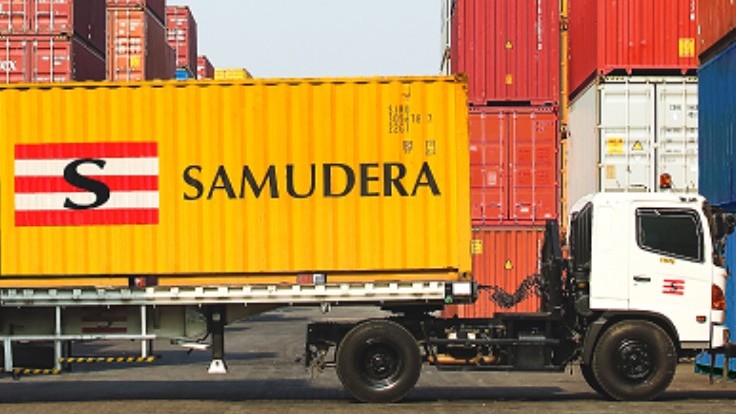
Carrier: SSL(Samudera Shipping Line)

Samudera Shipping Line Ltd..
This is a well-known shipping enterprise headquartered in Singapore with Indonesian state-owned background.
Company Basic Overview
Item Detailed Information Chinese Name Samudera Shipping Line Ltd. (Abbreviation: Samudera) English Name Samudera Shipping Line Ltd. Enterprise Nature Indonesian state-owned shipping enterprise (registered and listed in Singapore) Stock Code SGX: S56 (Singapore Exchange) Establishment Date 1993 (corporate entity) / 1964 (brand history) Headquarters Address Singapore (6 Raffles Quay)
Core Business and Routes
SAMUDERA's main business is to provide cargo transportation and logistics services to customers worldwide, and its business segments cover container shipping, bulk and tanker, agency and logistics.
- Advantage Routes: The company is deeply engaged in the Southeast Asia market, with services covering Malaysia, the Philippines, Indonesia, Thailand, Vietnam, Myanmar, etc.; it also provides shipping services to India-Pakistan (India, Pakistan, Bangladesh, etc.), the Middle East, and Australia-New Zealand (Australia, New Zealand).
- Operating Model: They use Singapore as a hub port to provide container cargo transportation services with other feeder ports in Asia, and also operate point-to-point transportation within the region.
- Fleet strength:
- Container ships: This is its main source of revenue, responsible for feeder transportation within the region.
- Bulk carriers: In May 2025, its subsidiary received two 66,000-tonne supramax bulk carriers. These new ships are equipped with SCR systems to meet Tier-III emission standards and feature shallow draft characteristics, making them highly suitable for the special navigational operating requirements of Southeast Asia.
Samudera Shipping's route network uses Singapore as its hub port and, through the “hub-and-feeder” model, covers four core regions—Southeast Asia, the Indian subcontinent, the Far East, and the Middle East—while continuing to expand into markets such as China and Northeast Asia.
Core Southeast Asia routes:
As the company's core market, the Southeast Asia route network is dense, with particularly significant advantages in connections to the Indonesian archipelago.
Indonesian archipelago routes: Operates multiple routes connecting major ports such as Jakarta, Surabaya, Semarang, Belawan, and Palembang, providing dense services with 1 to 3 sailings per week.
Intra-Southeast Asia routes: Services cover Malaysia, Thailand, Vietnam, Myanmar, the Philippines, and other countries. Specific ports include Port Klang, Penang, Bangkok, Songkhla, Ho Chi Minh City, Yangon, Manila, and others, with sailing frequencies of 1 to 4 per week.
Recently added routes:
Kuala Lumpur–Tanjung route (launched in May 2026): Singapore – Kuala Lumpur – Penang – Singapore, one sailing per week, strengthening connectivity in the North Sumatra region.
Batam-Myanmar direct service: Batam – Singapore – Port Klang – Yangon, weekly service, no transshipment via Singapore required.
Indian Subcontinent and Middle East routes:
This region is a key focus of the company's westward network, with operational support through its own offices (such as Dubai and Mumbai).
Indian Subcontinent: Operates multiple routes covering India's **Chennai, Kolkata, Mumbai, Mundra, Pipavav**, Bangladesh's **Chittagong**, Sri Lanka's **Colombo**, and Pakistan's **Karachi**.
Middle East and Gulf region: With **Dubai** as the regional hub, provides intra-regional services connecting upper Gulf ports, as well as regional routes linking the Gulf with the Indian Subcontinent. The **Straits-India-Gulf (SIG)** route connects Southeast Asia, India, and the Gulf region.
Recently added route: **Khor Fakkan India Express (KIX) (launched in July 2026), with port rotation **Nhava Sheva – Mundra – Khor Fakkan – Nhava Sheva, weekly service, strengthening connectivity between India's west coast and the Gulf region.
Far East and Northeast Asia routes:
The company is actively expanding into the Far East market, particularly China and Northeast Asia.
China routes: Service coverage includes major ports such as Ningbo, Shekou, Nansha, Qingdao, and Shanghai, with some routes operated by the company's own vessels.
Northeast Asia routes: Korea-Japan Shuttle (KJS) (launched in April 2026), connecting Japan's **Nagoya and Kobe** with Korea's **Busan**, weekly service, marking the company's entry into the Northeast Asia trade corridor.
Bulk and tanker routes:
In addition to container shipping, the company's bulk and tanker fleet is mainly used to transport **petroleum, chemicals, gases, liquefied products, and dry bulk, with business coverage spanning Southeast Asia as well as **Indonesia's domestic market**, chartered to customers through time charters, contracts of affreightment, or single voyages.
Summary: Samudera Shipping's route network is centered on Singapore, with the densest feeder services in **Southeast Asia (especially the Indonesian archipelago)**, while radiating outward through **Indian Subcontinent, Middle East, and Far East** routes, and continuously expanding network coverage by launching new routes (such as KJS and KIX).
PT Samudera Indonesia Tbk.
Jl. Letjen S. Parman Kav. 35
Jakarta 11480
General inquiries:
Telp: + 62-21-5480088, +62-21-5347210, +62-21-5304185, +62-21-5347210
Official website: https://www.samudera.id/
Cargo tracking: https://www.samudera.id/