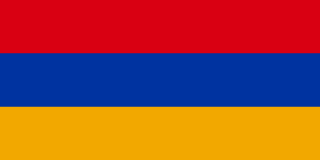
About This Region
The Republic of Armenia (Armenia), referred to as Armenia, is a small mountainous country located at the junction of Europe and Asia in the Caucasus region, bordered by Turkey to the west and Georgia to the north. Armenia and its eastern neighbor Azerbaijan are also among the many republics that became independent after the dissolution of the Soviet Union. Its capital is Yerevan. Ethnic Armenians account for 93.3%, with others including Russians, Kurds, Ukrainians, Assyrians, Greeks, and others. Armenia is a small landlocked country, and the vast majority of its citizens believe in Christianity. However, because it is surrounded by Islamic countries and also due to border disputes with neighboring countries, it has become a volatile powder keg region in the Caucasus. Armenia's main economic source is agriculture and animal husbandry, with agricultural production concentrated only in the lowland areas near the capital. Yerevan: formerly transliterated as “Yerevan”. The capital of Armenia and its economic and cultural center. It is one of the world-famous ancient cities, located on the banks of the Razdan River, only more than 20 kilometers south of the Turkish border. Situated on a hillside, it is surrounded by beautiful scenery. Elevation 850–1,300 meters. Area approximately 90 square kilometers. Population 1.3 million. The city is divided into 7 districts. Most of it is located on the left bank of the Razdan River. The city center is where the administrative organs of the Republic of Armenia are located. The area around the city is a fertile agricultural zone and a distribution center for fruits and vegetables. One of the ancient cities of the Transcaucasus. Today it is the mechanical industry center of the Transcaucasus, producing automobiles, transformers, mobile power stations, etc. Industries such as synthetic rubber, chemical fertilizers, aluminum smelting, building materials, textiles, and shoemaking are also important. More than half of Armenia's industry is concentrated here. It is an important machine tool and electric motor production center in the Transcaucasus, and the chemical industry (rubber, fertilizer) and non-ferrous metal smelting are also important. It has thermal power plants and several hydroelectric stations, and nearby there is also a nuclear power plant (installed capacity 810,000 kilowatts), making it a large power hub. It has an academy of sciences, research institutes, and Yerevan University, as well as a history museum, literature and art museum, and botanical garden. There are railways to Tbilisi, Leninakan, and other places, and it is an important station on the railway to Tehran, the capital of Iran. Several highways converge here, and it has airport facilities.