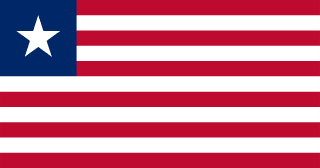
About This Region
The Republic of Liberia (English: Republic of Liberia) is a country in Africa, located in West Africa. It borders Guinea to the north, Sierra Leone to the northwest, Côte d'Ivoire to the east, and the Atlantic Ocean to the southwest. In the early 19th century, some freed American slaves systematically migrated to the area now known as Liberia, so the country's name in English carries the meanings of “liberty” (liberty) and “liberated” (liberated). Liberia is an agricultural country and one of the world's least developed countries as published by the United Nations. The agricultural population accounts for 72% of the total population; the country has 3.8 million hectares of arable land, of which less than 13% has been developed, and it cannot feed itself. Location and territory: Liberia is located in West Africa. It borders Guinea to the north, Sierra Leone to the northwest, Côte d'Ivoire to the east, and the Atlantic Ocean to the southwest. Its coastline is 539 kilometers long, and its land area is 111,400 square kilometers. Liberia has a tropical monsoon climate, with an average annual temperature of about 25°C. The warm season lasts from January 1 to May 8, with an average daily maximum temperature above 31°C. In the cold season, which lasts from July 6 to September 17, the average daily high temperature is below 28°C. Natural resources: Liberia is very rich in mineral resources, forest resources, land, water conservancy, and other resources. Its main mineral resources include iron ore (by 2014, proven reserves exceeded 10 billion tons), as well as abundant deposits of diamonds, gold, bauxite, copper, lead, manganese, zinc, nickel, rutile, and kyanite. It is rich in land resources and is suitable not only for developing high-quality rubber but also for growing rice, cassava, corn, beans, vegetables, palms, and coconut trees. The country's rivers have huge potential for hydropower storage. The capital is connected by trunk roads to all major administrative regions of the country. Roberts International Airport in the eastern suburbs is one of the largest airports in Africa. Liberia's shipping industry is world-renowned; the capital has more than 20 regular international shipping routes connecting it to the outside world, and the Port of Monrovia is one of the largest modern ports in West Africa, with a water area of 300 hectares and an annual throughput of more than 10 million tons. Railways: As of 2014, Liberia had only 2 railways nationwide, with a total length of 490 kilometers, of which 145 kilometers were narrow-gauge railways. All were operated by mining companies for transporting iron ore; they were severely damaged during the civil war and are now out of service. Roads: As of 2014, Liberia's total road length was 11,000 kilometers, including 2,036 kilometers of all-weather roads and 739 kilometers of asphalt roads. They were relatively severely damaged during the civil war. Water transport: The shipping industry occupies a special position in the world. There are five ports, including Monrovia, Greenville, Harper, Buchanan, and Robertsport, with an annual cargo volume of 200,000 tons. Air transport:As of 2014, there were 47 airports in the country, including 2 large airports, with direct flights between the capital and each county capital. Roberts International Airport, located in the capital, was once one of the largest airports in Africa; it was destroyed in the civil war in 1990 and reopened in December 1997. Currently, Brussels Airlines, Ghana Airways, and others operate services in Liberia.