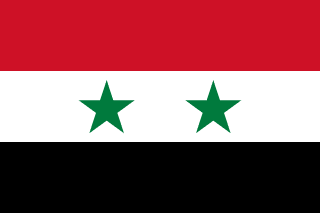
Tartus
Port Overview
The Port of Tartus is located in the southern section of the Mediterranean Sea off Syria, approximately 18 nautical miles south of Banias, about 30 nautical miles north of the Port of Tripoli, and roughly 290 nautical miles southwest of Port Said. The Port of Tartus is Syria's second-largest commercial and fishing port, and it is also the only military base of the Russian Navy outside the former Soviet region.
Port composition:
The port area is enclosed by two breakwaters: the south breakwater is 2,650 meters long, the north breakwater is 1,650 meters long, the entrance channel is 250 meters wide, and the water depth is 10.5 to 13 meters. Within the port there are four piers extending southwest, and basins are formed between the piers and between the piers and the breakwaters.
Between the north pier and the breakwater is the naval basin, with a water depth of 6 meters (design depth up to 9 meters). Between the north pier and the central pier is the north basin, originally 10.5 meters deep but now only 4 meters. Between the central pier and the south pier is the central basin, originally 12 meters deep but now only 4 meters. Between the south pier and the south breakwater is the south basin; its eastern section is 300 meters long with a water depth of 8 meters, and its western section is 200 meters long with a water depth of 9–10.5 meters, providing anchorage for 12 vessels, with ro-ro cargo handling equipment on shore. Northwest of the south basin there is a west-extending wharf and a small pier, which are phosphate terminals; the water depth alongside the landward section is only 4 meters, while the extending small pier is 250 meters long with a water depth of 11 meters and can berth 35,000-ton class bulk carriers.
About several nautical miles northwest of the dry cargo port area there are two offshore oil berths; the north berth has a water depth of 23.17 meters and the south berth has a water depth of 21.95 meters, both capable of berthing 100,000-ton class tankers. Underwater there is a 711-meter oil pipeline connecting to the shore, with a loading and unloading rate of 400–500 tons per hour. The port is Syria's second-largest commercial and fishing port.
Military
The Port of Tartus is the only military base of the Russian Navy outside the former Soviet region. In August 2011, the Russian Navy announced that its station at Tartus would receive heavy warships after 2012, including cruisers and even aircraft carriers.
Climate
Tartus has a subtropical Mediterranean climate, with prevailing northeast winds in winter and mostly southwest winds in summer. The average annual temperature is about 10°C in winter and about 30°C in summer. From January to March each year there is heavy rain and possibly storms, and the average annual rainfall is about 1,200 mm.
Historical role and contemporary value
In the late 1950s, the Syrian government, imbued with Arab national liberation sentiment, established good diplomatic relations with the Soviet Union; the two sides aligned on many international issues, and Syria also became a frontline for the Soviet Union in its confrontation with the United States. Starting in 1956, the Soviet Union actively provided military aid to Syria. In 1967, Israel launched the “Six-Day War”; Syria and other Arab states were defeated, Damascus lost even “its gateway”——and the Golan Heights were also lost. Seeking self-preservation, Syria requested that the Soviet Union station troops on its territory, so that Israel would not dare to advance further.
On November 23, 1970, Assad, a former air force colonel, seized supreme power in Syria; he sought to build a “Republican Guard”that was ideologically loyal and highly capable. To this end, Assad relied closely on the Soviet Union, obtaining not only substantial military aid but also inviting Soviet military advisers down to battalion-level units. For the Soviet Union, which was then trying to expand into the Mediterranean, this was undoubtedly “like a pillow meeting a sleepy head”, and it smoothly requested the provision of military bases. In 1971, the two countries signed a treaty, and the Soviet Union built a base in Tartus to support its Mediterranean Squadron (the 5th Operational Squadron), which was also the first Soviet fleet to be home-ported at a foreign port.
In the spring of 1974, Major General Pavel ·Romanovich, head of the political department of the Soviet 5th Squadron, led a large fleet to visit Syria and proposed that three or more Soviet warships be allowed to be permanently stationed at the base. Romanovich wrote in his memoirs: “At first Syria let us use Tartus only as a temporary anchorage. At that time it was simply impossible to carry out warship repair work. But Syria also raised its own concerns. They said that the U.S. 6th Fleet was the object of Soviet attention, while what troubled Syria most was the Israeli navy. The Syrian side hoped to obtain Soviet intelligence so that it could take corresponding measures in time. At the same time, it hoped to receive as soon as possible the advanced frigates it had purchased from the Soviet Union. ”
After the two sides reached an agreement, the Soviet Union began to use this base on a large scale. From 1967 to 1976, a total of 361 Soviet warships went to Syrian ports to anchor. In April 1977, Syria for the first time allowed a small number of Soviet military personnel to be stationed at the base, and the importance of the port of Tartus to the Soviet navy increased greatly.
With Tartus as a foothold, the activities of the Soviet navy in the Mediterranean also became more active. The Soviet Mediterranean Squadron was specially used to counter the U.S. 6th Fleet, which dominated the Mediterranean, and was also responsible for monitoring the movements of the Israeli navy. The size of this squadron basically fluctuated according to the seasons, maintaining 30-40 ships in winter and increasing to 50-60 ships in summer. Whenever U.S. aircraft carriers conducted aircraft takeoff and landing training in the eastern Mediterranean, the Soviet Union would dispatch warships from Tartus to accompany and monitor them.
Relying on the Tartus base, the increasingly active Soviet navy aroused strong vigilance from the United States and Israel. In 1973, during the “Yom Kippur War”, the large amount of military aid provided by the Soviet Union to Egypt and Syria all used the port of Tartus as a material transit base. To reverse the unfavorable situation, on the night of October 11, 1973, Israeli Navy Commander Major General Telem led a missile boat formation in person in a surprise attack on the port of Tartus. Four Syrian missile boats and two coastal radars were destroyed in succession, and two Soviet merchant ships were also damaged and ran aground; the Soviet merchant ship “Mikhanikov” was bombed and sunk. Afterwards, the angry Soviets not only refused Israel's apology, but the then Soviet ambassador to the United States, Dobrynin, also lodged a strong protest in the name of the Kremlin over the attack.
The situation subsequently escalated further. On October 24, 1973, Egypt's 3rd Army on the east bank of the Suez Canal was encircled by the Israeli army. Brezhnev threatened that Moscow would not hesitate to intervene unilaterally in the Middle East war and impose a ceasefire. To this end, the Soviet navy continuously provided reinforcements. Navy Commander Gorshkov even publicly declared that he had ordered amphibious forces to prepare to land on the Israeli coast in support of the encircled Egyptian 3rd Army.
On October 25, 1973, under U.S. pressure, the Israeli army temporarily stopped its siege of the Egyptian army. But Moscow still ordered Soviet warships in the eastern Mediterranean to hold large-scale anti-carrier exercises. During the exercises, all Soviet warships directly aimed at U.S. aircraft carriers, and an accidental discharge could lead to the situation spiraling out of control. Faced with this Soviet tactic of mutual destruction, the Pentagon had no good solution. At the time there were also rumors that the Soviet Union had deployed nuclear missiles in Egypt and was ready at any time to strike Israel. Under various concerns, Washington ordered the aircraft carriers to withdraw, which was undoubtedly a clear signal sent by the White House to Moscow that the United States was willing to reconcile. Only after Israel and the various countries signed ceasefire agreements did Soviet warships completely cancel their combat readiness status. After the end of the
“Yom Kippur War”, an exhausted Egypt, lured by the United States, withdrew from the Arab united front, made a separate peace with Israel, and broke free from Soviet control. Imperceptibly, Syria replaced Egypt and became the Soviet Union's only ally in the Middle East. After that, the Soviet Union further increased its military presence in Tartus and tried every possible means to bolster and encourage Syria.
As the Cold War reached its peak in the 1980s, the Soviet Union further hoped that Syria would agree to allow the construction of a new naval base within its territory for the Mediterranean Squadron. Then-Soviet Defense Minister Ustinov stated that a new naval base needed to be built in Syria to show the world that the Soviet Union would not abandon its friends. On October 8, 1980, the two countries signed a treaty of friendship and cooperation. It stipulated that if a third party launched aggression against Syria, the Soviet Union would intervene. But Soviet Foreign Minister Gromyko opposed this proposal, because in the event of an emergency, the safety of Soviet troops stationed in Syria could not be guaranteed, and it might instead drag the Soviet Union into a large-scale conflict. Ultimately, the Soviet leadership failed to reach agreement on building a new naval base.
Despite the setback in building a new base, Soviet enthusiasm for the Tartus base grew increasingly high. In the mid-1980s, the Soviet Navy repaired 7 submarines and 8 surface ships at the base each year, and the base's infrastructure was continuously improved.
From August 22 to 29, 1988, the Soviet Union's most advanced aircraft carrier “Baku” docked at the port of Tartus. Syrian Defense Minister General M·Mustafa Tlass and Navy Commander Lieutenant General M·Mustafa Tayyara visited the aircraft carrier, during which a total of 4,405 Syrian civilians boarded the ship for visits. In January 1990, the Soviet destroyer “Otlichny” departed from Tartus and conducted a week-long surveillance of the U.S. “Eisenhower” aircraft carrier strike group, obtaining a large amount of data.
Even after the dissolution of the Soviet Union in 1991, when the Mediterranean Squadron was disbanded, the Tartus base was not abolished but only downsized to the “material and technical support station”. From 1991 to 2007, every time the Russian fleet entered or exited the Mediterranean, it stopped at the Tartus base for supplies. Currently, the base has two PM-61M-type piers, one of which was built in 1999, as well as a floating repair dock, a warehouse, and multiple barracks buildings, with 50 Russian military personnel stationed there long-term. It is said that Russia has deployed S-300 long-range surface-to-air missiles in Tartus, and of course this system can also protect a large area of southern Syrian territory. From 2010 to 2012, Russia carried out extensive construction in Tartus with the aim of upgrading it to a modern base capable of berthing large warships such as cruisers and aircraft carriers. Obviously, as long as Russia does not give up the Black Sea Fleet and its military presence in the Mediterranean, the strategic value of the Port of Tartus will not decline.
Location
Related Freight Rates


Frequently Asked Questions
What port code is shown for Tartus?
The Awice Logistics directory lists Tartus in Syria under port code SYTAR.
How can I find shipping services for Tartus?
Use Tartus as the origin or destination in the ocean freight search to review available carriers, rates and schedules.